Please add image or text logo


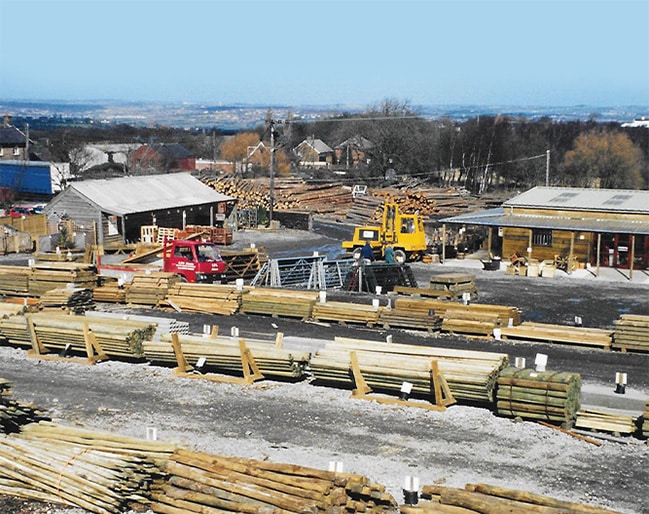
Today, Earnshaws’ Midgley centre is associated with timber, fencing, landscaping and woodland. It is a place where customers come to browse garden buildings, fencing, gates, decking, landscaping and outdoor lifestyle products.
But the site has a much older industrial story.
The land occupied by Earnshaws is part of the former Denby Grange Colliery, linking the business to the long history of coal mining in the Wakefield and Midgley area. What was once a working coal-mining site has been given a new purpose, continuing a tradition of employment, industry and enterprise that has shaped this part of West Yorkshire for generations.
Coal has been mined across the Huddersfield and Wakefield district for centuries. The British Geological Survey notes that coal working in the Huddersfield area may date back as far as the 13th century, with mining reaching its peak during the nineteenth century. By the twentieth century, however, the industry was in decline and the last commercial coal production in the district had ended.
The Denby Grange estate was one of the important coal-mining areas in this part of Yorkshire. Mining took place across a number of pits and workings, including Caphouse, Hope, Blossom, Inman’s and the Prince of Wales Pit.
The story of these workings stretches back well before the modern colliery. Historic records indicate coal leases and mining activity around Caphouse from at least the late eighteenth century. The Caphouse shaft was developed around this period, while further pits were developed during the nineteenth century as the Denby Grange mining enterprise expanded.
One of the most significant developments came in the nineteenth century.
The Prince of Wales Pit, sometimes known locally as the Wood Pit, was sunk near New Hall Wood in the Netherton area in the 1870s. Its workings were subsequently incorporated into the Denby Grange Colliery complex. The pit became an important part of the area’s coal industry and continued operating for many decades.
The colliery produced coal for a variety of uses, including household, manufacturing, gas, coking and steam purposes. Historical records also show the scale of employment associated with the mine: in 1923, the Denby Grange workings employed around 840 people.
For generations, coal mining was therefore not simply an industry in the background. It was a major part of the local economy and landscape.
The coal industry changed dramatically during the twentieth century.
In 1947, the country’s coal mines were nationalised and Denby Grange became part of the National Coal Board. The industry continued to modernise, with changing methods of extraction and increasing mechanisation.
The final chapter of coal production at Denby Grange came in 1991, when the Prince of Wales/Denby Grange workings closed. The Northern Mine Research Society records the Denby Grange colliery as closing in August 1991.

The closure of the mine created an opportunity for a very different type of business to take root.
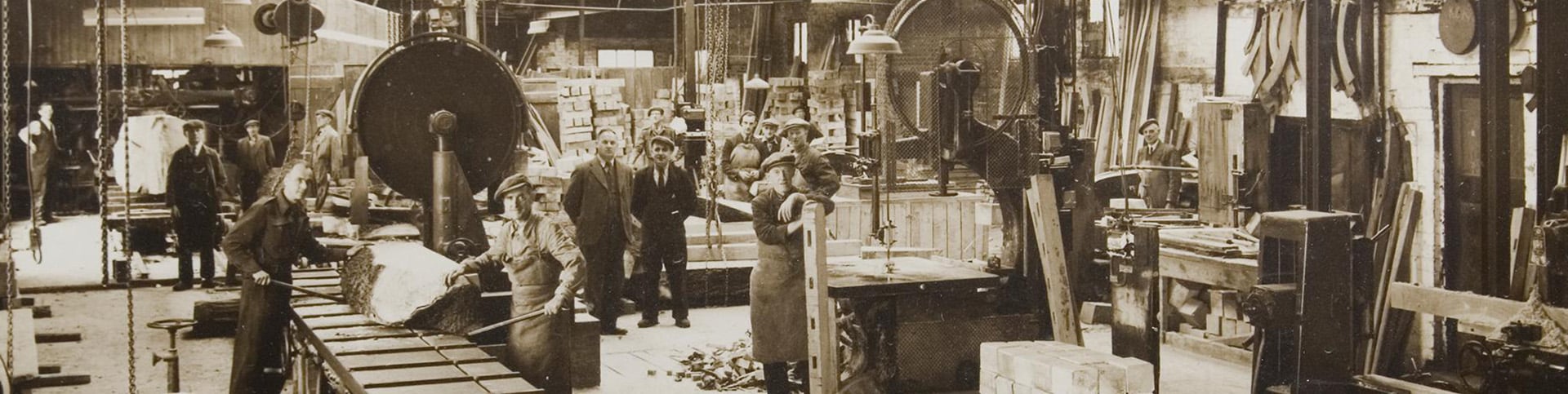
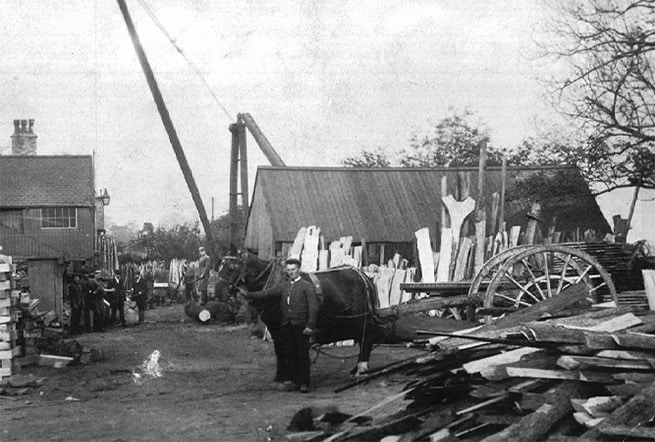
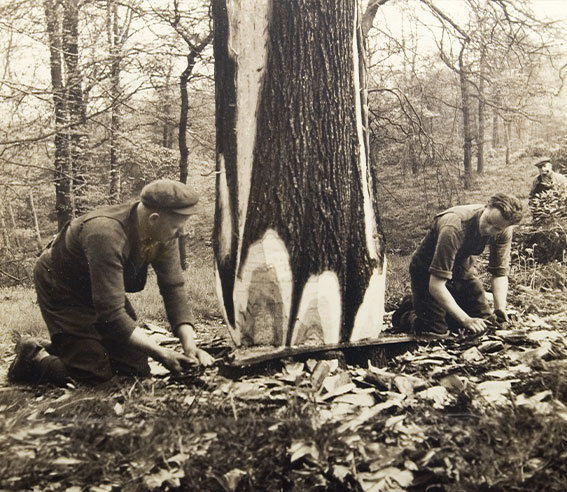
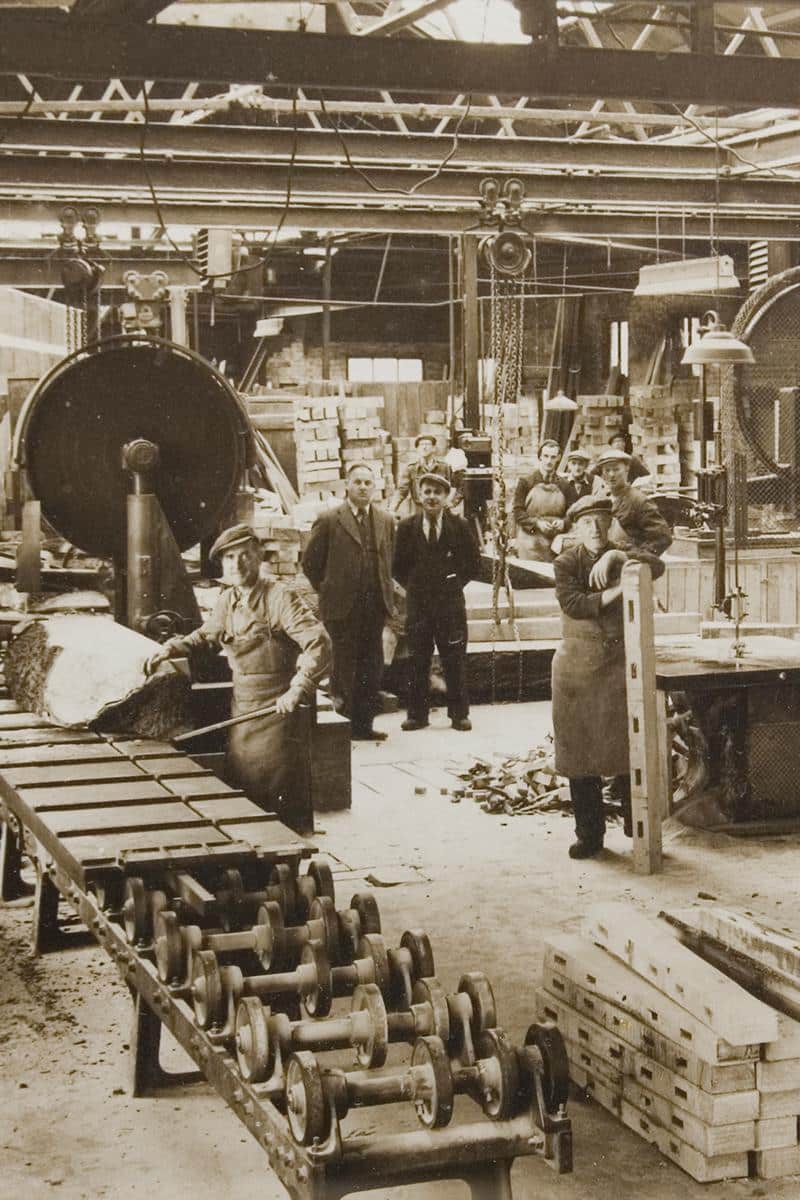
Earnshaws had already been part of the local landscape for more than a century. The company traces its origins to 1860, when Job Earnshaw and his brothers established a small sawmill at Midgley. The early business produced timber components for horse-drawn carts, gates, fence posts, rails and agricultural uses.
For generations, timber and the land around it had been at the heart of the Earnshaw family business.
When the local coal mine closed, Earnshaws saw an opportunity to bring its Midgley operation onto the former industrial site. In 1996, the company relocated its entire Midgley operation to the newly developed 13-acre site.
The move marked a striking change in the site’s purpose: from producing coal to processing timber and supplying products for gardens, landscapes and homes.
There is an interesting connection between the two industries.
Coal and timber were both fundamental to Yorkshire’s industrial development. Timber was historically used throughout the mining industry for supports and infrastructure, while the surrounding woodland and agricultural landscape provided another important source of local employment and materials.
At Earnshaws, that relationship between land, timber and industry has continued in a completely different form.
The modern Midgley operation combines timber processing, manufacturing, distribution and retail. The site has been developed into a destination where customers can see fencing, gates, decking, garden buildings, landscaping products and outdoor furniture.
The story of the site is also part of the much longer story of Earnshaws itself.
Records show that the Earnshaw family has been connected with the timber trade since around 1780, while the business itself was formally established in 1860. Early production was largely focused on practical timber products needed by farms, tradesmen and local communities.
The business gradually evolved alongside changing technology and changing customer needs.
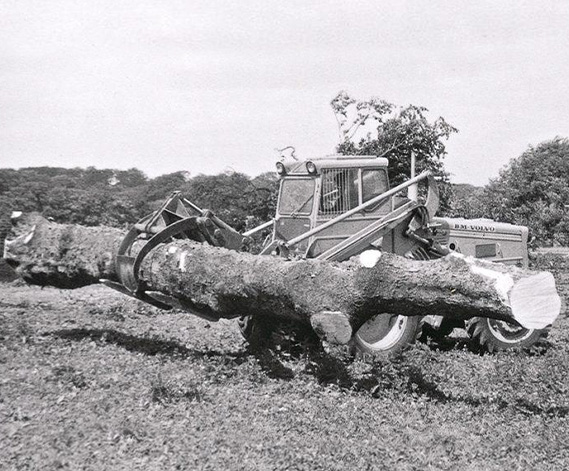
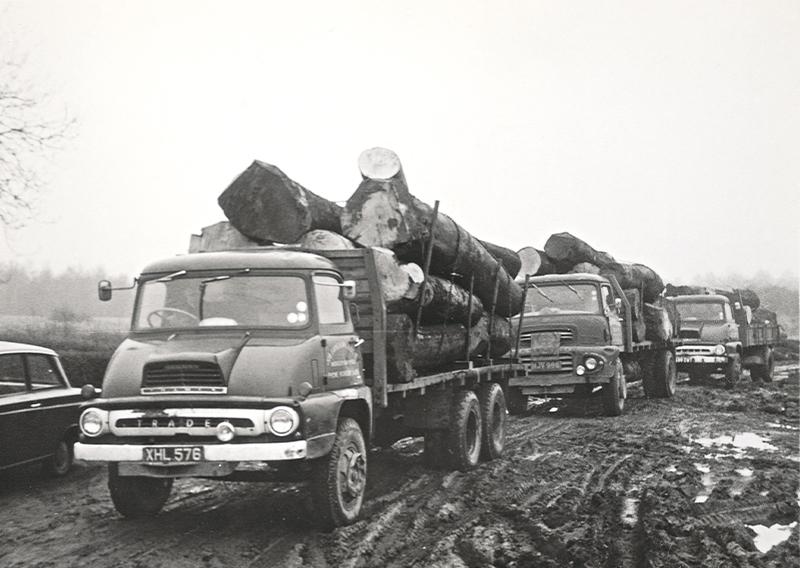
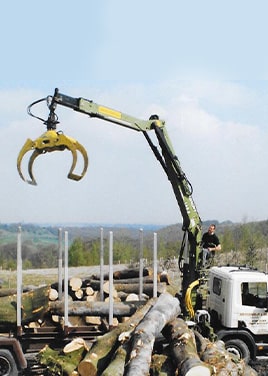
Steam power was introduced in the nineteenth century, followed by electrification in 1939. Mechanisation transformed forestry and timber production from the 1960s onwards, with chainsaws, loaders, cranes and increasingly sophisticated processing equipment changing the way timber was harvested and handled.
By the late twentieth century, Earnshaws had developed from a traditional timber business into a modern supplier of fencing, landscaping and garden products.
The redevelopment of the former mining site is an example of how industrial land can acquire a new identity.
Where coal was once brought to the surface, timber is now processed and supplied. Where mining machinery and colliery buildings once dominated the landscape, customers can now explore garden displays, fencing, decking, gates and outdoor living products.
The transformation also reflects a wider change across West Yorkshire. Many former coal-mining sites have had to find new uses following the decline of the industry, while communities have sought to preserve the history of mining alongside creating new opportunities for employment and business.
Earnshaws’ Midgley site forms part of that story.
The story is particularly fitting because Earnshaws has retained a strong connection with woodland and forestry.
The company describes itself as one of Yorkshire’s oldest timber and forestry businesses and continues to manage woodland as well as process and manufacture timber products. Its approach includes an emphasis on sourcing timber responsibly and, where possible, locally, while reducing unnecessary transport and fuel miles.
Today, the Midgley centre also includes woodland walks, giving visitors an opportunity to experience a greener landscape alongside the site’s industrial history.
Few places tell the story of Yorkshire’s industrial transformation quite as clearly as this.
Coal mining was once one of the defining industries of the region. The Denby Grange workings employed hundreds of people and formed part of a much larger network of pits, railways and waterways.
When the mine finally closed in 1991, the future of the site was uncertain.
Five years later, Earnshaws moved its Midgley operation onto the former colliery site. The result was not simply the reuse of an old industrial area, but the beginning of another chapter in a story that had already lasted for generations.
Today, the site combines Yorkshire’s industrial heritage with its continuing timber tradition.
From coal to timber, from colliery to garden centre, the Midgley site continues to evolve — while remaining firmly rooted in the history of Yorkshire.

Sales and advice  01924 830055